

Medically reviewed by Mr Shivram Singh MBBS, FRCSI, FRCS (Plast), Medical Director & Lead,
Medical Advisory Committee for Manchester Private Hospital
Last Reviewed October 28th 2025
This Article Covers:
- Why Men Often Confuse Gynecomastia with Chest Fat
- What Is Gynecomastia?
- What Is Chest Fat (Pseudogynecomastia)?
- How to Tell the Difference Between Gynecomastia and Chest Fat
- Can Exercise or Weight Loss Fix Gynecomastia?
- Treatment Options: What Works and What Doesn’t
- What to Expect from Gynecomastia Surgery at MPH Manchester
- Before and After: Realistic Results and Recovery
- Why Choose Mr Faisal Ashfaq at Manchester Private Hospital
- Take the First Step Toward Confidence
- Related Reading
Many men struggle with excess chest fullness and wonder whether it’s gynecomastia or simply chest fat. Both conditions can affect confidence and body image — especially when shirts feel tight or gym progress doesn’t seem to help.
To help you understand the difference and what can be done, Mr Faisal Ashfaq, Consultant Plastic Surgeon at Manchester Private Hospital, shares his expert insight into diagnosing and treating male chest enlargement safely and effectively.
Why Men Often Confuse Gynecomastia with Chest Fat
It’s incredibly common for men to feel self-conscious about chest shape, particularly when they notice puffiness, unevenness, or extra volume around the nipples.
While gynecomastia and chest fat may look similar from the outside, the underlying causes are very different. One involves glandular breast tissue growth, while the other is simply fat accumulation — and that distinction determines whether exercise alone can help or if medical treatment is needed.
As Mr Faisal Ashfaq explains, “Recognising the difference early allows patients to choose the right path — lifestyle changes where possible, or surgical correction when necessary.”
What Is Gynecomastia?
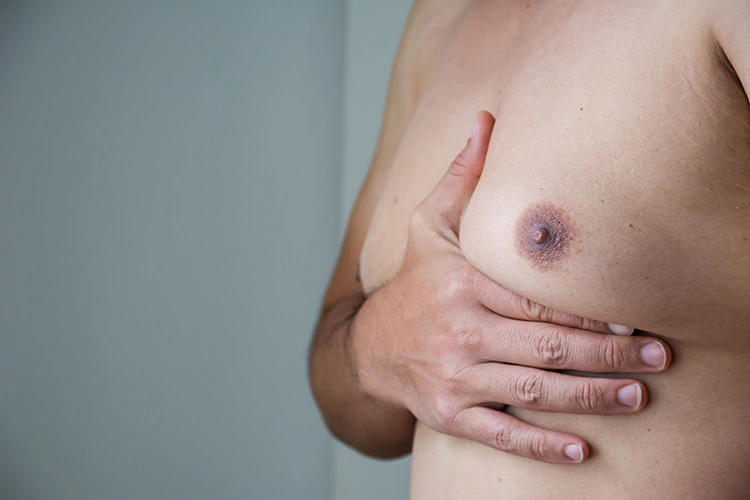
Gynecomastia refers to the enlargement of glandular breast tissue in men. It’s usually caused by a hormonal imbalance — where oestrogen levels are slightly higher than testosterone.
This can occur during puberty, after certain medications, or with ageing. In some cases, anabolic steroid use or medical conditions affecting hormones can trigger it too.
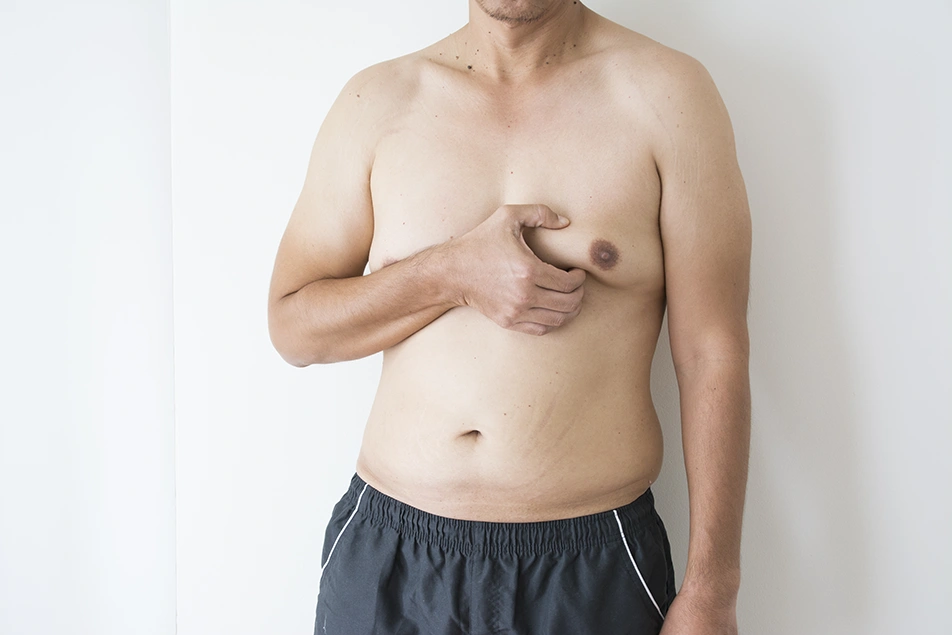
Unlike chest fat, this firm glandular tissue won’t shrink with weight loss or exercise. Many men describe it as a rubbery lump directly beneath the nipple, sometimes tender to touch.
At Manchester Private Hospital, patients with true gynecomastia are carefully assessed to confirm the diagnosis before any treatment is recommended.
What Is Chest Fat (Pseudogynecomastia)?
Chest fat, also known as pseudogynecomastia, is caused by excess fatty tissue rather than gland growth. It’s often linked to overall weight gain, poor diet, or reduced physical activity.
Unlike true gynecomastia, this condition can usually be improved through fat loss, strength training, and a balanced diet. However, persistent fat deposits in the chest area can still make some men feel uncomfortable, even after losing weight — in which case liposuction may help to contour the chest.
Mr Ashfaq adds, “For some men, it’s a mix of both — fat and glandular tissue — which is why a consultation is so important before planning any treatment.”
How to Tell the Difference Between Gynecomastia and Chest Fat
Here are a few signs that can help you identify what’s happening:
| Feature | Gynecomastia | Chest Fat (Pseudogynecomastia) |
|---|---|---|
| Texture | Firm or rubbery gland under the nipple | Soft, fatty, and evenly spread |
| Tenderness | Often sensitive or sore | Usually not painful |
| Location | Localized behind the nipple-areola | Distributed across the chest |
| Response to Weight Loss | Doesn’t shrink with dieting or gym | Improves with fat loss |
If you notice a firm lump behind the nipple or ongoing puffiness that doesn’t improve with exercise, it’s best to get a professional assessment. A consultation with Mr Faisal Ashfaq can determine whether it’s true gynecomastia or fat-related swelling.
Can Exercise or Weight Loss Fix Gynecomastia?
This is one of the most common questions men ask — and the short answer is no.
While losing weight can reduce overall body fat, it doesn’t remove the glandular breast tissue that causes gynecomastia. Many men who train intensively still find that their chest remains prominent despite building muscle.
As Mr Faisal Ashfaq explains:
“Gynecomastia isn’t caused by laziness or poor fitness — it’s a hormonal and tissue issue. Once the gland forms, it won’t disappear naturally.”
For genuine chest fat, however, exercise and diet can make a significant difference. That’s why accurate diagnosis is so important before deciding on surgery.
Treatment Options: What Works and What Doesn’t
For Chest Fat:
- Weight loss through diet and cardio
- Chest-focused strength training (presses, push-ups)
- Healthy lifestyle changes to reduce overall fat levels
For Gynecomastia:
Surgery is the most effective solution for lasting results:
- Liposuction – removes excess fat to sculpt the chest contour
- Gland excision – removes firm gland tissue that liposuction can’t eliminate
- Combined approach – most patients benefit from a mix of both techniques
At Manchester Private Hospital, Mr Faisal Ashfaq performs day-case gynecomastia surgery under local or general anaesthesia. The procedure typically takes 60–90 minutes, and patients return home the same day.

What to Expect from Gynecomastia Surgery at MPH Manchester
Here’s what patients can expect under the care of Mr Faisal Ashfaq:
1. Consultation: Detailed chest examination and medical history to confirm diagnosis.
2. Anaesthesia: Local with sedation or general anaesthetic for comfort.
3. Liposuction: Small incisions (2–3mm) used to remove fat and contour the chest.
4. Gland Excision: Tiny incision along the areola to remove firm gland tissue.
5. Closure & Support: Fine sutures and a compression vest for smooth healing.
Most men can return to light activities within a few days and resume workouts after 3–4 weeks.
Mr Ashfaq and his team ensure that every patient receives a personalised recovery plan and direct aftercare support for the best outcome.

Before and After: Realistic Results and Recovery
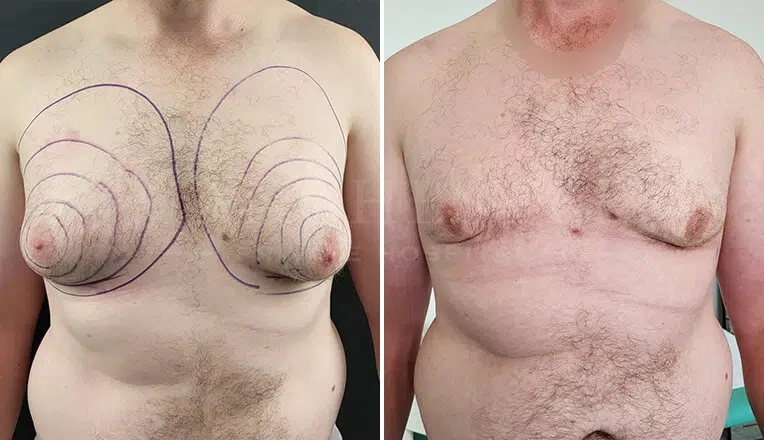
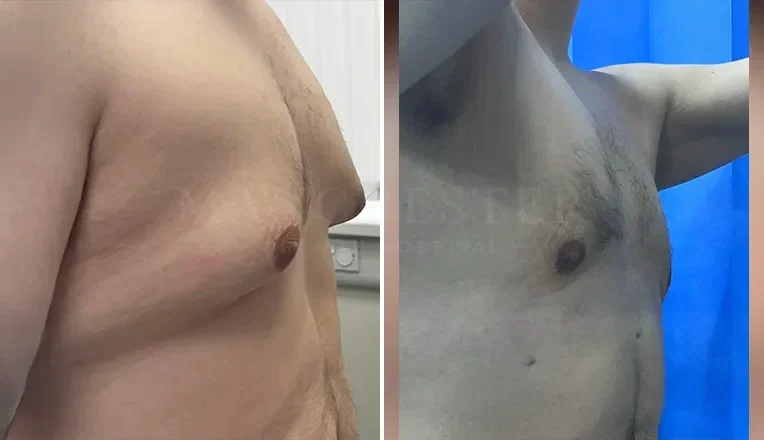
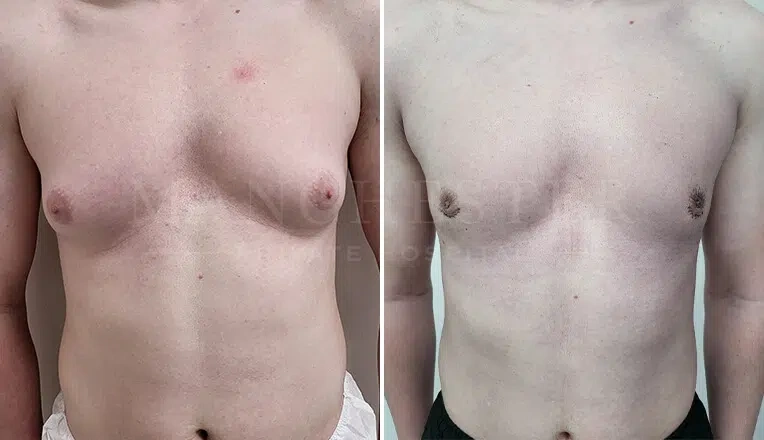
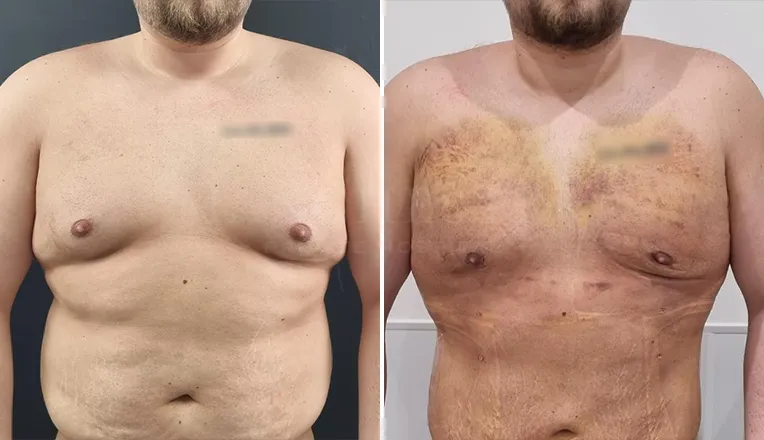
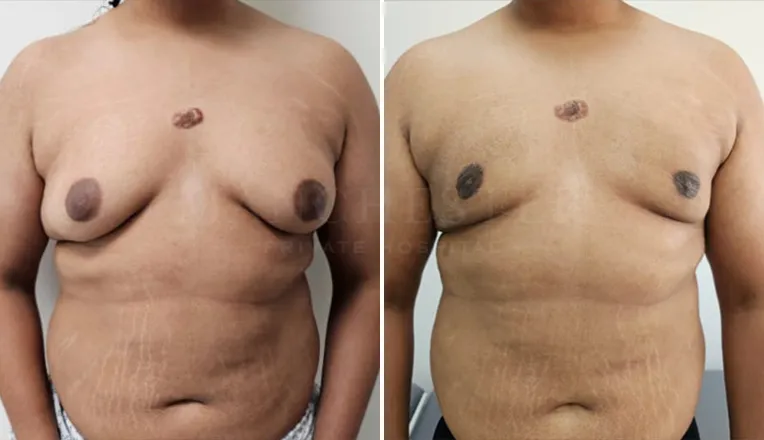
Post-surgery, swelling and mild bruising are normal and subside within a few weeks. Most patients notice a flatter, firmer, and more masculine chest contour almost immediately.

Gynecomastia | 3 months post op
At MPH, the goal is always natural, symmetrical results that restore confidence without visible scarring. You can view real examples in our Gynecomastia Surgery Before and After Gallery.
Why Choose Mr Faisal Ashfaq at Manchester Private Hospital
- GMC-registered Consultant Plastic Surgeon with years of experience in male chest contouring.
- CQC-approved facility ensuring safety, comfort, and discretion.
- Tailored treatment plans based on your anatomy and goals.
- Natural-looking outcomes that enhance confidence without an artificial appearance.
At MPH, you’re not just treated as a patient — you’re guided through every step of the journey by a team committed to care, trust, and long-term results.
Take the First Step Toward Confidence
If you’ve been struggling to tell whether your chest enlargement is gynecomastia or fat, you don’t have to guess. A quick consultation can provide answers and open the door to a more confident you.
Book a confidential appointment with Mr Faisal Ashfaq at Manchester Private Hospital today, and take the first step toward reclaiming your shape and confidence.
Related Reading
Gynecomastia Surgery Manchester
Male Liposuction Manchester
Gynecomastia Before and After Photos
Gynecomastia Before and After Gallery
Read Our Patient Reviews
Explore our reviews made by real patients
Meet Our Expert Surgeons
Get to know our highly experienced surgeons
Consultation Locations
We offer Consultations from a number of locations around the UK
Prices and finance
We have partnered with Chrysalis Finance, allowing patients to apply for cosmetic surgery finance for all our procedures
Consultation Locations
Manchester Hospital
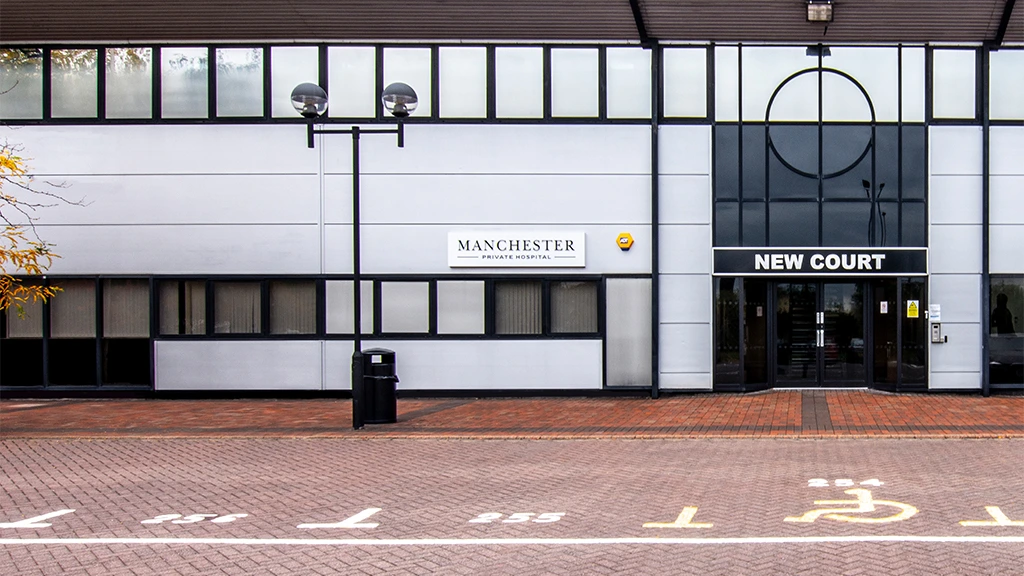
Manchester Private Hospital New Court, Regents Place, Windsor
Street Salford, Greater Manchester, M5 4HB.